When the sun sets over Granada, the crowds disperse, and a different kind of magic takes hold of the Alhambra. The bustling chatter of daytime tourists fades, replaced by the soft murmur of water in the fountains and the gentle glow of amber lights against ancient stone.
For many visitors, the night tour is a romantic bucket-list item. But for those of us interested in the business of heritage tourism, it represents something else entirely: a fascinating case study in revenue management.
How does a UNESCO World Heritage site balance the delicate preservation of 700-year-old plasterwork with the need to generate income? The answer lies in the specific economics of the night tour.
This article explores the alhambra palace night tour attendance revenue, breaking down the numbers, the strategy, and why limiting visitors actually makes the experience more profitable.
The Unique Appeal of Alhambra After Dark
To understand the revenue, you first have to understand the product. Why do people pay a premium to see less of the monument?
During the day, the Alhambra is a massive complex. You can spend hours walking from the Alcazaba fortress to the Generalife gardens. At night, the experience is curated and condensed. The lighting is deliberate. It doesn’t just illuminate the path; it highlights specific architectural details—the intricate muqarnas (stalactite vaulting) on the ceilings, the inscriptions on the walls, and the reflection of arches in the still pools of the Court of the Myrtles.
This isn’t just a tour; it’s a mood. It feels exclusive. It feels private. That emotional connection is the foundation of its economic success. Because the experience feels premium, visitors are willing to pay for it, even though they technically see fewer square meters of the palace than they would at noon.
Attendance Trends: Quality Over Quantity
When we look at the numbers, the difference between day and night operations is stark. The Alhambra welcomes over 2.5 million visitors annually. However, the night tours operate on a much smaller scale.
The Numbers Game
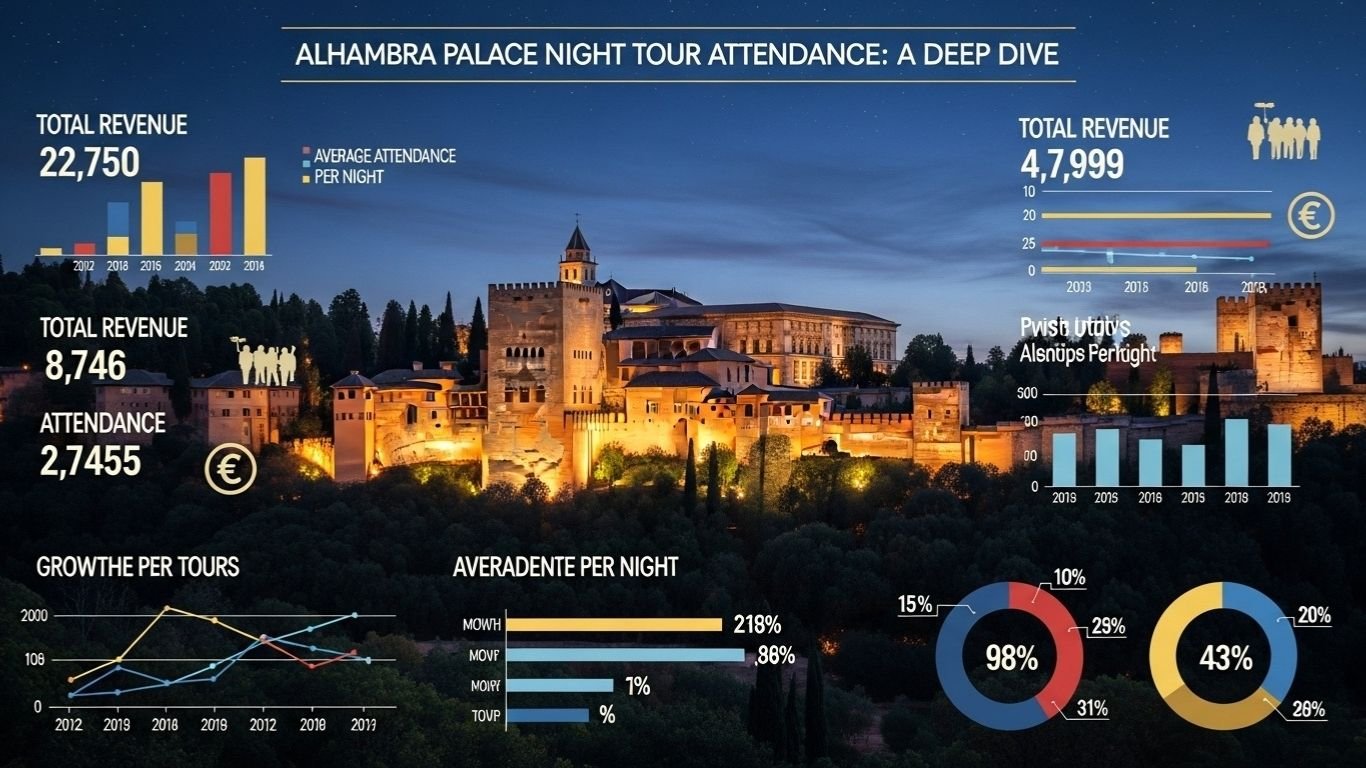
Estimates suggest that night tours attract between 120,000 and 150,000 visitors per year. While this might seem like a drop in the bucket compared to the millions of daytime guests, these are “high-value” visitors.
The attendance is intentionally capped. You won’t find the shoulder-to-shoulder crowds that can sometimes occur during peak summer days. Instead, groups are small, and entry is strictly timed.
Seasonal Rhythms
Like all tourism in southern Spain, attendance flows with the seasons:
- Peak Season (April – October): This is when the night tour really shines. Warm Andalusian nights make walking through open-air courtyards delightful. During these months, tickets often sell out weeks in advance.
- Off-Peak (November – March): Attendance drops as the temperature cools. However, even in winter, there is a steady stream of cultural tourists who appreciate the solitude of the palace in the colder months.
Who Visits at Night?
The demographic profile of the night visitor is distinct. While daytime crowds include large tour bus groups and school trips, the night tour attracts a different crowd.
- International Travelers: A significant portion of attendees come from the US, UK, France, and Asia (particularly Japan and South Korea).
- Couples and Solo Travelers: The romantic atmosphere draws fewer families with young children and more adults seeking a quiet cultural experience.
- Repeat Visitors: Interestingly, many people who visit at night have already seen the Alhambra during the day. They return specifically for the unique atmosphere, effectively buying two tickets for one trip.
Revenue Insights: The Economics of Exclusivity
Now, let’s get to the core of the topic: alhambra palace night tour attendance revenue. Despite accounting for a small fraction of total foot traffic, night tours punch above their weight financially.
Contribution to the Bottom Line
Industry analysis indicates that night tours contribute approximately 15% to 22% of total ticket revenue. This is a massive contribution given the limited operating hours and reduced capacity.
How is this achieved? Through a strategy of high yield per visitor.
Pricing Power
The Alhambra utilizes a pricing structure that reflects the premium nature of the evening visit.
- Standard Tickets: A basic night visit might cost around €8 to €10, which seems affordable.
- Guided Experiences: This is where the revenue jumps. Official guided tours, often bundled with whisper-audio systems to keep the noise down, can range from €25 to over €50 depending on the provider and exclusivity.
- Dynamic Demand: During special events or peak holidays, demand far outstrips supply. While the official ticket price is regulated, the secondary market for guided tours sees prices surge, driving revenue for the broader local tourism ecosystem.
Ancillary Revenue
It’s not just about the entry ticket. The night tour drives spending in other areas:
- Audio Guides: Because the night tour is self-paced for many, audio guide rentals are popular, adding pure profit on top of the ticket price.
- Bundled Packages: Local tour operators smartly bundle night tickets with Flamenco shows in the nearby Sacromonte caves or late dinners in the Albaicín district. This creates a high-value “night out in Granada” package that boosts the local economy.
Balancing Preservation with Profit
The most impressive aspect of the Alhambra’s model is that it generates this revenue without sacrificing the monument. In fact, the revenue model is designed to protect it.
The Conservation Challenge
The Alhambra is fragile. Thousands of feet walking over centuries-old floors cause damage. Humidity from breath can harm plasterwork. Flash photography degrades pigments.
By shifting a portion of demand to the evening and capping the numbers, management reduces the pressure on the site during the day. It spreads the wear and tear.
Controlled Flow
Night tours use specific routes. Visitors are generally kept to a one-way path. This isn’t just for traffic control; it ensures that guests move efficiently through the space without bottlenecking, maximizing the number of people who can safely enjoy the site without overcrowding.
Sensors and monitoring systems are increasingly used to track environmental conditions in the palaces. If humidity rises too high in the Hall of the Ambassadors, flow can be adjusted. This data-driven approach ensures that tourism remains sustainable for decades to come.
Economic Impact on Granada
The financial ripples of the alhambra palace night tour attendance revenue extend far beyond the palace walls. The night tour is a major engine for Granada’s nighttime economy.
When a tourist books a night tour:
- They stay overnight: You can’t visit the palace at 10 PM and catch a bus to Seville the same day. Night tours force an overnight stay, benefiting hotels.
- They eat dinner late: Spanish culture loves late dining, and night tour visitors flood local restaurants before or after their visit.
- They shop: Shops in the city center stay open later to capture the foot traffic moving toward the Alhambra bus stops.
It creates a “sticky” tourism effect, keeping visitors in the city longer and encouraging them to spend more.
Future Trends: Virtual and VIP
Looking ahead, revenue is projected to grow, potentially exceeding €10 million by 2026. But since they can’t simply add more people without damaging the site, how will they grow?
Innovation Over Expansion
The future lies in increasing the value of each ticket, not the number of tickets.
- Augmented Reality (AR): Imagine pointing your phone at a faded wall and seeing the original 14th-century colors overlayed on your screen. AR experiences can be sold as premium add-ons.
- VIP Niches: We are likely to see more ultra-exclusive, high-price tours for very small groups, perhaps led by historians or conservation experts.
- Themed Nights: Special tours focused on photography, history, or garden architecture could attract niche audiences willing to pay double or triple the standard rate.
Conclusion
The Alhambra Palace night tour is a masterclass in modern heritage management. It proves that you don’t need to pack a site with people to make it profitable. By creating a unique, high-quality atmosphere and pricing it correctly, the Alhambra generates vital funds for its own preservation while offering visitors a memory they will never forget.
For other historic sites around the world, the lesson is clear: sometimes, the best way to increase revenue is to turn down the lights and lower the volume.
Frequently Asked Questions
How much revenue do Alhambra night tours generate?
While exact figures fluctuate annually, night tours are estimated to generate between €8 million and €12 million per year. This accounts for roughly 15-20% of the site’s total ticket revenue.
Is the Alhambra night tour worth the price?
Absolutely. Most visitors find the experience deeply moving. The lack of crowds and the dramatic lighting offer a perspective on the architecture that is impossible to get during the day. It is generally considered a premium experience.
Do I need to book night tour tickets in advance?
Yes, highly recommended. Because attendance is capped to preserve the site, tickets for night visits—especially to the Nasrid Palaces—sell out weeks or even months in advance during the summer season.
What is the difference between the day and night tour?
The day tour grants access to the entire complex, including the Alcazaba, Generalife, and Palaces, often with large crowds. The night tour is restricted to specific areas (usually either the Palaces or the Generalife gardens) and focuses on a quiet, atmospheric experience with specific lighting effects.
Where does the money from ticket sales go?
The revenue is reinvested into the Patronato de la Alhambra y Generalife. It funds the massive costs of conservation, restoration, security, gardening, and research required to keep the monument standing for future generations.